Curious about what’s behind Eclipse? Explore my author notes about the historical details behind the book.
These notes do contain some plot spoilers! Otherwise, they’re as shared at the end of the book, with edits only to share the most useful links and cleaning up some formatting for the web. Posted March 2026.
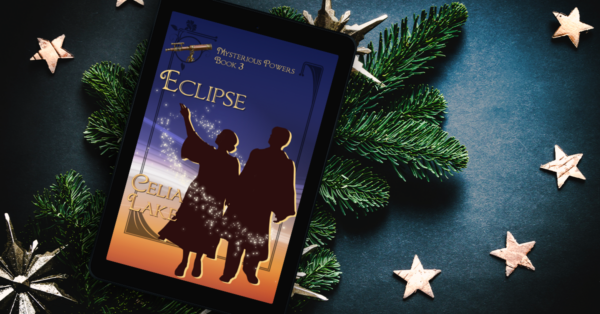
Thank you so much for joining me on this trip through a year at Schola, with all its trials, tribulations, and passions. This author’s notes covers historical topics, but also where you can read more about Thesan, Isembard, and their later lives. I’ve updated these notes in January 2024 with a bit more about that and some forthcoming titles in the next section.
First, a few specific bits of thanks. I am very grateful to the people who made this particular book better. That begins with the other player-authors in HP Alternity, an alternate-universe Harry Potter fan project in an unusual format that ran from 2007-2015. My experience there led to so many thoughts about how magical education might work, how many staff you need to do it right, and what houses (in the classic British school sense) might mean if the magic was thoroughly interwoven with their existence. This book is in many ways my thoughts on all of that. We’ll come back to the houses.
Many thanks as well to my early readers, who all made comments that improved this book, and to my most excellent editor, Kiya Nicoll, who put up with my “Help, this doesn’t work the way I want it to.” comments over and over again until I was satisfied.
I should note here that while I have taken an astronomy course in college, and did a fair amount of background reading on the topic for Alternity, I am absolutely not an astronomer. I have relied on Star Walk (an app that lets you see where the stars were at a particular point in time), research, and double-checking everything as thoroughly as I can. If you see an error in the astronomy, please let me know.
I am also very grateful to the panelists on a panel at Boskone 58, held online in February 2020. I had just started the editing process for this book. Everyone on the panel on “The Learned Astronomer: Cultural Roles of Stargazing” made excellent comments about astronomy, and the role it could play in stories (including a number of things were already in the text). Several anecdotes from Brother Guy Consalmagno, S.J. – the current head of the Vatican Observatory and a longtime member of science fiction fandom – made me much more certain about how to approach several scenes.

Do you want more about these characters?
Since Eclipse, I’ve written a number of other books that feature Thesan and Isembard, along with others who appear in this book. You can find the full details and interconnections at my authorial wiki.
Thesan and Isembard have additional adventures at Schola in the winter of 1926 (along with Pross and Ibis, who fell in love in Magician’s Hoard). That’s in Chasing Legends, a novella collected in Winter’s Charms.
Thesan helps solve an old mystery in Three Graces in 1945.
Isembard and Thesan’s son Leo is one of the main characters in The Magic of Four, a school story set at Schola during the 1946-1947 school year, following four students (including Leo) in their second year at school. His older sister Ursula will have a romance in an upcoming book out in May 2025. Keep an eye on my newsletter and website for more about that!
Alexander Landry gets pulled into a bit of continental espionage in 1935, as the world rushes into another war in Best Foot Forward. Nocturnal Quarry, the next book in the Land Mysteries series, is a character-focused novella about Alexander’s trip to America in 1938.
Claudio and Orion are main characters in Illusion of a Boar in 1944 when they are both in their 30s during the Second World War. (And one of them finds his romance in that book.) There will be more about both of them in the coming years.
And if you like the glimpse of Mabyn here, she has a late-in-life romance in The Hare and the Oak in 1926.
A school story, focusing on teachers
I spent ten years working in an independent day school (in the library, not as a subject teacher), as well as two years as a student in a demanding boarding school. I have many opinions about teaching, what makes it good, where and how it can fail. And even more about how when you put several hundred teenagers in the same place, there is simply a huge amount going on.
I wanted to write a book that reflected the complex messy reality of any school year. There are always more things going on than any one person can pay attention to. It is impossible to tell in many cases how unusual or concerning those things will be when you first hear about them.
There are, of course, the usual ups and downs of relationships forming and changing and breaking. There are panics over assignments or grades, or students who do not do the work for some reason. And of course, many problems are outside a given teacher’s scope for all sorts of reasons.
From the teacher’s point of view, a school year is full of balancing different tasks. There is the day to day work of teaching and marking assignments, creating exams, and guiding projects. There are whatever routine tasks all teachers share, like supervising students in the library, in public spaces, or doing evening patrols or check-ins.
Some teachers will have responsibility for particular groups (the houses here, or dorm parents in many boarding schools.) There are sports events, and training for the sports, and of course someone has to manage and support all those extracurricular projects like plays, performances, clubs, and activities.
Magical education
First, since publishing Eclipse, I’ve set up a public wiki with more information about Albion, including Schola. There, you can find a map of Schola, more details about the seven Houses, and which characters are associated with them.
Schola is the oldest of the magical schools of Albion, and a summary of the school’s history is given in the text of the book. Schola was founded in the 600s by a series of masters and mistresses of their magical arts who took on apprentices, gradually accumulating enough that larger structures were built, then the Keep around 1100. It has flourished ever since, becoming the school most focused on higher theory and providing students with the background to go on to learn about creating new forms and applications of magic.
When anyone in the magical community of Albion turns twelve, they are evaluated by a department of the Ministry, to understand their general level of magical ability, and they take a written exam. The results – and the biases of the examiners – determine whether the student is offered a place at one of the Five Schools, or whether they go directly to apprenticeship when they turn thirteen.
When they turn thirteen, everyone in Albion makes an oath to the Silence, joining them to the agreement not to reveal magic to people without it. There is also a process for identifying people with meaningful magical ability born outside the community (such as Rathna Stone, in The Fossil Door).
If you’ve read any British school stories (or are familiar with the upper crust sort of British boarding school) you know that it is common for students to be divided into houses, the places where they live. I grew up on Enid Blyton and the Chalet School series, but there are often strong associations of house loyalty in sports, in praiseworthy activities (getting points for doing well in class or being particularly helpful), as well as the simple tendency to associate with the people we’re around the most.
From my first book, I’ve been thinking about what that means in a magical community. Here, the House shapes you magically. Some of that is subtle, from the people you are around day in and day out. Some of it is much more explicit: each House has specific magical skills that are passed down within the House. If you have read Magician’s Hoard, there’s a discussion of some of Seal House’s focus there. Owl House has an excellent and wide ranging set of indexing charms. Horse, as Thesan says, has a lot of magical work related to the heart, home, and family.
First, a few numbers. Schola has 350 students, 70 for each class year. It has 7 Houses, so there are 50 students in each House. The size allows close connections with other students in your year, and the year above or below, but also connections with students several years older or younger. As described in the early chapters, there are professors (course teachers), and also a number of other staff who make things run smoothly in the kitchens, the Houses, and throughout the school. The village is large enough for three pubs and a number of specialist shops.
Every school needs a curriculum. Thesan and Isembard, of course, know how this works, and thus don’t explain every detail. The core subjects are drawn from classical education and the seven liberal arts. Trivium is the study of grammar (and writing in general), rhetoric, and logic. The other four (the Quadrivium) are Arithmetic, Geometry, Music, and Astronomy. All students at Schola arrive with a certain basic level of competence in reading, writing, and maths that they learned from village schools, tutors, tutoring houses, or family. These seven areas of study are developed further.
As Thesan implies, however, most students do not take all of the Quadrivium subjects. About half the year’s class does (35 students or so), but others take only two or three of the four. It largely depends on their later goals for specialisation. Someone who wants a strong Ritual magic background needs a fair bit of astronomy to understand the chronological and locational aspects of those rituals, or at least how to be sure that the person actually doing the calculations for them is doing them right.
First years take Trivium and Quadrivium, as well as Natural History, Society, and Culture courses. Second years add in courses about different broad types of magic: Sympathetic magic, Incantation, Ritual, Alchemy, and Materia. (The last is a broad view of ‘how do the materials we use affect what we do with magic’ and covers everything from making practical objects like pots to hold magic to the creation of talismans or magical items for specific purposes.) Most students take two or three of these topics but some take all five, depending on their goals.
In fourth year, students begin to work more independently, and on more advanced topics, including a number of applications of magic. These include Healing, Flora (the study of herbs and plants), Time and Place (chronological and locational magic), Martial and Protective magics (taught by two different teachers), and additional Natural History.
Each student at Schola must also demonstrate competence in at least one language regularly used for formal rituals and magical workings. Latin is by far the most common, partly because it is still in regular ritual use for many of the Great Families. However, Attic Greek, Arabic (in the dialect of the magical community), Hebrew, and Sanskrit are all commonly used, and many students also learn or improve other languages depending on their family needs and their likely field of choice. These are handled through small classes or tutoring with teachers or crafters on the island, or whatever makes sense.
Music and the arts are threaded throughout, both in individual lessons and through performances and opportunities that shift from year to year. There are lectures on different topics each week to fill in gaps in formal coursework or give students a chance to learn about different professions or skills. There are a handful of student secret societies we only see glimpses of here (specifically Dius Fidius and the Nine Muses.)
And of course, there is bohort. It is probably useful to think of bohort as a combination of capture the flag and a puzzle game. There are various rulesets, about what the challenges might be. Before the match, the winning conditions are established, and they can be different for each match. They often involve points for capturing one or more flags, or getting the flag back to your home territory. But you might also win points for solving puzzles that lead to another goal, like getting a treasure chest down from the top of a tall rock, or figuring out clues that tell you where something is hidden.
The version used at Schola focuses on puzzle-solving and magic, as it’s seen as more educational, but matches for adults might have more physical goals or ones that require more advanced magical skills. (Pavo is the same basic game, but played on horseback, which changes a number of factors.) Both derive from mediaeval military training.
This means that the style of play can vary a lot, and the teams need to be resourceful and creative. During the school year, there is a round robin tournament between the Houses, as well as a school team who places in Albion’s apprentice league. Matches like this, of course, are an anchor of the school’s weekly schedule, and having seven Houses means there’s plenty of variety in who to cheer for.
On to the rest of the book!
A few notable people
The notable characters list at the beginning of the book lays out the names and positions of the main teaching staff and a few students. Several of them appear in other books.
Richart Hase, head of Seal House, also appears in Magician’s Hoard, which gives a good idea of his view of being Head of House. Hypatia Ward also has a slightly larger role in that book.
Major Gospatrick, mentioned by Isembard, appears in Carry On, and the change in approach that Isembard talks about is in part because of the events of that book.
Alexander mentions Alfred Adler (by last name) who was a psychologist with a particular interest in the personality develops, and a look at someone’s whole self in the context of psychology. Alexander also obviously refers in passing to Freud’s theories of socio-sexual relationships, which his question about Thesan’s relationship with her father.
Up on the Astronomy tower in chapter 16, Thesan identifies several features in the sky – Uranus, Mars, and the star Hydor in Aquarius. The smudge she’s not sure about is in fact the comet 184P/Lovas 2, which was discovered in 1980, but was right there in the sky in 1924. As Thesan mentions, magical telescopes rely on magic for some enhancement in focusing and making objects more visible by using locational magic to identify the area of focus and filtering out unwanted light sources.
If the name Wallington Aylett seems familiar to you, thank you for reading On The Bias. There’s more about the Ayletts in Nocturnal Quarry and some brief mentions in Perfect Accord.
I owe a number of friends thanks for sharing their ridiculous school theatre performance stories. I have a little experience myself, but they made the revue so much better with all the ideas about what might happen, what’s gone wrong. If you ever need a conversation starter, ask about performance stories, you’re likely to be laughing in minutes. Of course, that kind of musical revue with a series of acts (linked in this case by theme) was a popular form of entertainment through the later Victorian period well into the 1940s.
Back to astronomy, Thesan identifies the various illustrations in the text, but I wanted to mention that Amalthea is the last moon discovered by physical observation, in 1892. Triton was discovered in 1846, just 17 days after they discovered Neptune. Astronomical history is often wild and wonderful.
The Council keep is at a deeply magical castle, Dinas Emrys, near Snowdonia. You may know the tale in Geoffrey of Monmouth’s History of the Kings of Britain that is one of the earliest appearances of Merlin in the literary record, where a white dragon and a red dragon are fighting and until they are stopped, any tower built there will collapse. There are earlier mentions, but both the literary tradition and archaeology suggest that there was a substantial fortress there that was active in the 5th century CE. I have, of course, utterly appropriated it and built a rather sizeable castle on it.
Isembard mentions that the Guard oaths would not permit the kind of fighting or a number of the actions he took during the War. Pastiche, set mostly in 1906, talks a lot more about the Guard, and Richard’s approach to his oaths.
If you’d like to see more of Rhoe (who also appeared in Carry On), she and Hugh get a book of their own in Sailor’s Jewel. Set in 1901, it takes place on an ocean liner, when Rhoe and her brother Cyrus take a trip.
Of course, the star of the book, in astronomical terms, is the eclipse. There was, in fact, a solar eclipse in 1925 where the island of Schola got almost to totality, but the path of totality went north through the outer edges of the Scottish islands. Many of the mentions about eclipses come from existing lore, as well as the fact that they are often seen as a break in pattern. If you’d like more to read about the mysteries of an eclipse, Sun Moon Earth by Tyler Nordgren is an excellent overview.
The Ursa Major moving group is in fact a group of stars in Ursa Major who seem to have all had the same origin (along with a couple of stars we see in other constellations). The stars of the Pleiades also appear to have a similar origin to each other, as well as other star clusters. But as Thesan points out, most constellations are a figment of our imaginations, due to our particular position in the galaxy and universe.
Finally, the 1920s were one of the prime times for educational movements (as there have been at a number of other times). Like our teachers here, many schools and educational institutions were trying to figure out how to teach students in a rapidly changing world, and what that meant.
That’s it for my notes! Again, if you’d like to know about my latest news (and a round up of historically interesting links), my newsletter is the place to be. And again, you can find more details about all these people and where else they appear at my website and via my authorial wiki.
These sites also have all the details about additional free extras with a range of characters. These include Tea and Meetings and With All Due Speed which both focus on Thesan and Isembard. 12 Seconds in 1927 is about the total solar eclipse over Schola in June 1927.