Curious about what’s behind In The Cards? Explore my author notes about the historical details behind the book.
These notes do contain some plot spoilers! Otherwise, they’re as shared at the end of the book, with edits only to share the most useful links and cleaning up some formatting for the web. Posted March 2026.
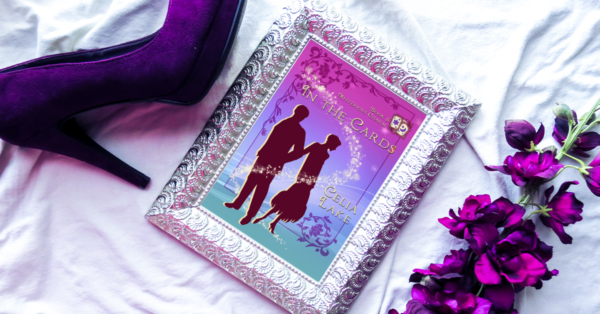
Thank you so much for reading In The Cards. I owe a particular thanks on this one to my editor and my early readers for helping me make the mystery plot stronger (and for cheering on Laura and her choices.) Any remaining errors are of course entirely mine.
If you’re curious about the story of Lord Geoffrey Carillon and Lizzie Penhallow, or curious about the details of the goldwasser, then Goblin Fruit has all of those for you. Laura appears there as a secondary character.
It’s likely quite obvious from this book that I’m a fan of more than just Dorothy L. Sayers when it comes to Golden Age of Mystery writers. I couldn’t resist trying my hand at a locked room murder mystery. They’re quite difficult to write, and keeping everyone straight took a lot of work. (Again, so much thanks to my editor and early readers for this.) Agatha Christie and all the others who contributed to this specific subgenre deserve a great deal of credit.
One of the threads through In The Cards is that Laura is a survivor of tuberculosis, a disease that killed vast numbers of the population. It is a bacterial disease, and you’ll often see it referred to as ‘consumption’. It’s been around through all of human history – the earliest evidence of the bacterium dates back to bison in 17000 BCE.
However, as people moved to the cities, the number of people infected grew. Estimates in the 1800s suggest that one in four deaths was caused by tuberculosis, more so among those living in poverty or in crowded city conditions (since it is most commonly transmitted by droplets shared through coughing or spitting.) Even with treatment about half the patients died within five years. We didn’t begin to reduce the number of cases substantially until the introduction of antibiotics. Unfortunately some strains of TB are now resistant to antibiotics.
The preferred treatment for people who could afford it was to go away to somewhere with fresh air and suitable nutrition and other support, in a sanitarium (also spelled sanitorium). As Laura describes, patients often had extreme restrictions on what they could do, and very regimented schedules. They were often in areas with particular kinds of air quality, notably mountains and seasides. (I grew up reading the Chalet School books, a series of British school stories which initially take place in the Austrian Tyrol, near a TB sanitarium.)
If you’d like to learn even more, I recommend Spitting Blood: The History of Tuberculosis by Helen Bynum for an excellent overview of both the medical side and the human side of the disease.
Facial injuries like the the one Julius suffered were regrettably not uncommon in the Great War. Even more regrettably, many families pressed those injured to hide away, or otherwise remove themselves from society. The ceramic mask Julius wears was one option commonly used, but a wide range of materials were used including cloth and metal. I first started thinking about this bit of history after reading Jacqueline Winspear’s Maisie Dobbs.
Tarot decks also have a long and complex history. Some early decks have survived, others we know about, but they only exist in fragmentary amounts. Over the centuries, they’ve been used for symbolic representations for ritual and meditation, for divination, for religious purposes, and just for playing cards. In The Cards has a bit of all of these except the religious. The reading in the first chapter is divinatory, Laura plays Tarrochi (a game with many variations played with a Tarot deck), and then later uses the deck to represent the people in the house through the cards.
What makes something a Tarot deck, rather than a different kind of card deck, is generally considered to be the structure. Tarot decks commonly have 78 cards. These include 56 cards of the Minor Arcana, made up of four suits (like a playing card deck), court cards (most commonly Page, Knight, Queen, King), and then 22 cards in the Major Arcana, sometimes also called trumps, that represent various archetypal forces. The suits commonly represent the four elements – swords, wands or staves, cups, and pentacles or coins.
If you’re at all familiar with Tarot, you’re probably familiar with the Rider-Waite-Smith deck, based on the instructions of A.E. Waite, drawn by illustrator Pamela Colman Smith, and published by the Rider Company. This deck was published in 1909, and it seems likely that Smith was influenced by some exhibits of older decks at the British Museum earlier that decade, so my characters could be familiar with the deck. However, I found that the symbology (rooted in a particular line of Western esoteric and magical theory) didn’t do what I wanted it to.
In the Cards references one well-known historic deck, the Marseilles, and two decks I made up. The earliest surviving cards of the Tarot de Marseilles were produced in the mid 1600s in Paris, France, but the symbology of the deck is a century or two older. This deck has scenes on some cards (the Major Arcana and court cards) but the other Minor Arcana are just pips or symbols. The Alpine deck, which gets referenced in passing, has some different images but roughly the same symbology, and is more popular in Switzerland and parts of France and Italy.
When I started In The Cards, I was intending to have the characters use the Marseilles deck, in part because I wanted the symbology of the Lovers card in that deck, which has a man choosing between two women, one younger and beautiful but poor, and one older but clearly well off, to set up Laura’s choices in the book. However, as I got further into the story, it became clear I was going to need something that suited the world and the character needs better.
A lot of reading about older Tarot decks later, I decided the best way to go was create my own. I’ve read Tarot for about two decades now, so this is not quite as daunting as it might be. (I use Tarot mostly as a way to get a better grasp on elements of a situation and what I should pay attention to, but I have used it in other ways.) The more I looked at options, the more I realised I also wanted a deck that decentred Christianity in the implied symbology, and that played on some of the specific history of Albion.
(It’s not as obvious in In The Cards as some of my books, but some people in Albion are Christian, but many are something else. Often that’s religious traditions rooted in family lines like Ibis’s commitments to Djehuty and Het-Heru in Magician’s Hoard, and Carillon’s family traditions that include a particular aspect of Mercury in Goblin Fruit, of those we’ve seen on screen. There are also many other religious represented in the magical community, of course.)
All these threads pulled me towards creating the Howard Tarot. The current form of the deck in Albion was commissioned by someone in the Howard family (a family of longstanding influence in England dating back to the Wars of the Roses) in the early 1600s. It is based on the symbology of an older deck used in the family since the early Tudor period.
I have not fully detailed all the cards yet, but there are a few I wanted to share here. Some of the cards are very similar to our known decks, but others have elements that are specific to historical events, or highlight different aspects.
The Magician depicts John Dee, court magician under Elizabeth I, or someone very like him, as a well-dressed Elizabethan man in a ritual circle chalked on the floor, with all the accoutrements of ritual magic. In a world with a variety of method of doing magic, this card takes on perhaps more of the meaning (also present in many decks) about not just being about magic, but about showy flashy forms of magic that may in fact be less effective than implied.
The Heirophant in the Howard Deck is Henry VIII, depicted around the time of his marriage to Catherine Howard (of the Howard family), in formal robes of state, showing rulership, but with an element of unpredictability or manipulation or threads of corruption that mean the figure is not necessarily serving the higher cause he claims.
The Wheel of Fortune gets mentioned by Laura early on, but she doesn’t explain that the Wheel of Fortune in the Howard Deck depicts the Battle of Bosworth Field, where the first Duke of Norfolk, John Howard, died fighting with Richard III. The wheel itself has red and white roses, showing the rise and fall of power and the competing York and Lancaster houses.
The Star in many decks has a naked woman pouring water. In the Howard, the woman is reaching up, appearing to touch a constellation above her, but is dressed in gauzy fabric. The figure in the Visconti Tarot is also reaching up to touch a star.
There is no card for The Devil in the Howard Tarot, instead it is a card that is about fear, bondage to fear, and a lack of light, hope, or potential. In decks that are designed for magical work, the card actually is enchanted to reflect the fear that comes when you come close to breaking a Silence-held oath. (I’m still deciding on the name for this one, but I expect it to show up in a future book somewhere.)
The Court cards also have a slightly different structure. In Albion, the Lords and Ladies of the land have specific magical obligations, so they are the obvious candidates to replace “King” and “Queen”. Likewise, apprenticeship plays a major role in most people’s lives in Albion, as the transition between childhood and adulthood, so it’s a natural fit to refer to the young active card as an Apprentice, rather than a knight. Child replaces Page quite naturally.
Finally, the suits are the same as in many decks, but they often reflect animals associated with particular Houses at the most elite of the magical schools of Albion, Schola. These houses are places where people live, but they also have their own lines of magical education and many people continue close connections in their house throughout their lives. In the Howard Tarot, Owl is associated with Swords, Boar and Fox with Wands, Salmon and Seal with Cups, and Horse and Bear with Pentacles.
Finally, the Guard are the magical law enforcement for Albion, with a number of divisions. This time, we get to see who deals with actual murder cases (relatively few and far between, as the magical population is numerically not huge, but there are enough there are people who specialise.)
Ancient Trust, a prequel novella about Laura’s brother-in-law, Geoffrey Carillon, is available if you sign up for my mailing list. It explains how he came to know Captain FitzRanulf in an entirely different sort of investigation.
You can find other stories with members of the Guard in Wards of the Roses, Outcrossing, On The Bias and Pastiche.
Learn more about Laura’s sister Lizzie and her romance with Lord Geoffrey Carillon (with appearances from Laura) in Goblin Fruit. Galen gets his own romance in Point By Point.
The newsletter and my social media accounts will have all the details about new and upcoming releases, and I hope to see you one of those places! Until then, happiest of reading to you.
Happy reading, and I do hope you’ll join me for future stories of Albion.