
Curious about what’s behind On The Bias? Explore my author notes about the historical details behind the book.
These notes do contain some plot spoilers! Otherwise, they’re as shared at the end of the book, with edits only to share the most useful links and cleaning up some formatting for the web. Posted March 2026.
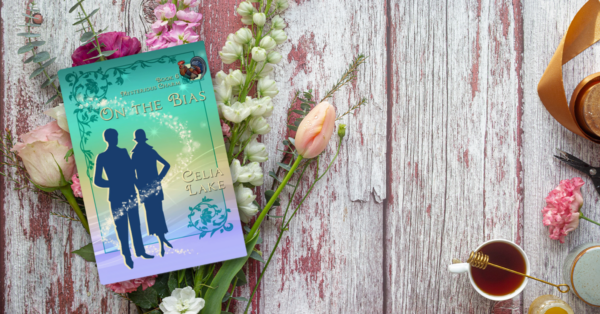
I do hope you’ve enjoyed On The Bias! As always, I owe my editor (Kiya Nicoll) and my early readers a great deal of thanks for making this a much better book. Particular thanks to Kiya for a discussion with a friend that led to my difficult rooster encounter. (Read on for more about that.)
As the copyright page mentions, the version you are currently reading has small revisions from the original, to reconcile the timeline of this book with Eclipse, which deals with Professor Fortier. It involved removing a few sentences in chapters 4 and 8 and half a sentence in chapter 36. There are also some small edits for clarity and smoothness.

I knew once I wrote Goblin Fruit (the story of how Lord Geoffrey Carillon tripped over Lizzie Penhallow, and they found themselves investigating the mysterious goldwasser drink) that I wanted to know more about Thomas Benton. I was intrigued by his loyalty, his attention to detail, and the fact that he made everything look easy.
Once I started writing, I was fascinated by how informative Benton could be in the right circumstances, compared to Carillon’s marked tendency to hold things at a distance. It was a pleasure to figure out more about their adventures and travels, and about how they’d come back to Albion.
And of course, one of the great delights of the 1920s is the clothing, and I’d known for a while I wanted a character who would give me lots of excuses to look at gorgeous dresses. (Check out my blog under the On The Bias category for links to more.)
I also had tremendous fun figuring out how magic would enhance or change the process for dressmaking. Cassie uses charms for everything from cutting a pattern and the fabric for the dress to decorative enhancements, to things like cooling charms for people who will insist on wearing Elizabethan gowns on a summer night.
The apprenticeship system in Albion gets explored more in this book, since Cassie both served an apprenticeship herself, and has three apprentices. I’ve based this part of things on an expansion of the mediaeval guild systems.
Nile green was a very popular colour in the 1920s, and it was also a great excuse for an argument, since the Nile really isn’t that colour. And of course, Benton knows, he’s been to Egypt. He also believes in things being properly labelled. (Arsenic was in fact used to make a variety of green pigments until people discovered it was quite dangerous to the health.) The other colours mentioned are also popular shades around the time of the book.
Life below stairs is a culture all of its own, and now that Ytene has an almost complete staff, it was time to explore a bit more of that. I found Servants: A Downstairs History of Britain from the Nineteenth Century to Modern Times by Lucy Lethbridge very helpful reading. (And I admit to having imprinted on the original Upstairs, Downstairs as a child…)
The story of how Mally Stone came to be a lady’s maid is in Goblin Fruit, and it was fun figuring out all the things she needed to learn to keep up with Lizzie and Carillon and their plots (and imminent wedding).
One of the pleasures of writing and editing books the way I do is that I get to introduce characters and ideas for future books while I’m editing. You’ll be seeing more of Professor Fortier in Eclipse, the third book of the Mysterious Power series, and also more about the mysterious Council (and a lot more about how Schola works). As I write this, I’m writing the first book in that series, so there will be a little bit of a wait.
Cock fights were officially made illegal in England and Wales in 1835, but of course, that didn’t actually stop it happening. It’s an ancient and rather bloody sport.
My editor, Kiya, was talking to a friend who had been reading machine-translated versions of romance novels, and the technology had decided to translate a particular explicit phrase as “He suddenly had a difficult rooster”. Kiya inquired if I might perhaps work that into a book. I’d actually already been looking for what kind of illegal setting Benton might find himself in, searching for more information, so I said “Sure! Cock fight it is!”
More relevant to the plot, while roosters sometimes had metal spurs put on them for cock fighting, they have sharp natural spurs on their legs that can do quite a lot of damage. And since those feet are around quite a lot of farmyard material, the chances for infection are quite high.
I am, as you might have noticed, fond of picking a thematic unity in my books, usually something that occurs three times. (I blame a classical education.) Here, it is a thematic unity of dangerous birds. Which brings us to swans.
In 1482 (so, for those of us in Albion, right around the time of the Pact, just before the death of Richard III), the crown decreed that only people who owned land and had a certain income could own swans. Who owned which swan was recorded with a mark on the beak. Over time, it came to be that only the crown and two guilds (the Vintners and Dyers) could own swans, and that for anyone else to do nearly anything with them was treason.
Of course, swans are not easy to manage, and rather dangerous in their own right. Which leads to the sensible question, “Why would you want to do anything with a swan except admire it from a safe distance?” The answer, of course, is the luxury aspect.
Chalice, the cat, is a nod to my own Astra, who is also black and likes to sit in the middle of the bed and take up space. (There are few photos of her I can share, because taking photos of a black cat is tricky.)
Comet vintages (like the 1811 Château d’Yquem) are a particularly interesting bit of wine lore, and I hope to explore this one in more depth at some point in the future. Basically, that’s “Wine bottled when there’s a comet”.
Chinoiserie is the term for a European interpretation and imitation (often rather exoticising) of Chinese and East Asian elements in clothing, furniture, art, and so on. Mostly fashionable in earlier centuries, it still showed up in the 1920s from time to time.
Falconry is an ancient sport of noble households, with a complex history I don’t do nearly enough justice to here. It does however get us our third dangerous bird. You might be familiar with eagle-owls (at least as a reference) from the Harry Potter books, since Draco’s owl is an eagle-owl. They’re quite large birds, and were being used for hunting through the 1920s.
Theodora, for whom the bird is named, was the wife of Justinian I, and empress of the Byzantine empire. Her parents were a bear trainer and a dancer and actress, and various histories (both of her time and later) have all sorts of comments on how someone from that background rose to be empress. They all generally agree she was exceedingly clever, strategically sharp, and very clear about what she thought needed to happen. She also did a great deal to improve rights and opportunities for women.
The bird, of course, is also quite clever and has her own ideas about what should be happening.
At the masked ball, Molière was a famous playwright, actor, and poet, and generally considered one of the greatest writers in the French language. Carillon and Lizzie pick him and one of his leading ladies because he did a great deal to publicise the Commedia dell’Arte form of drama. (Their meeting in Goblin Fruit explains why.)
Giles Lefton is costumed as Nicholas Saunderson, a famous 18th century blind mathematician. He was good friends with Isaac Newton, Edmond Halley, and others. I admit, though, this costume choice was largely so I could put Kate in a dress she’d find difficult to deal with. 18th century panniers are a feat of complex engineering, and entirely change the way you have to walk.
The potion that Benton has obtained comes from Mariam, who is mentioned very briefly in Magician’s Hoard – she and Ibis knew each other in Cairo. (Perhaps sometime I’ll write more about her. She clearly is mistress of some complex magics.)
The books in chapter 38 reflect the range of reading available. I had originally intended the mystery novel to be Clouds of Witness, but after reconciling a couple of timelines, this book is in 1925, not 1926 (when the Sayers book came out).
The translation of Herodotus quoted here is from the Loeb Classical Library edition by A.D. Godley (Harvard University Press, 1920-1925, now all in the public domain) and available in various places online if you’re curious about most of it.
When I was taking Greek, we spent a semester on Herodotus, where I discovered that if he is talking about people’s customs, and you don’t know a vocabulary word, it probably is a kind of food. If it is a battle, that verb you don’t know probably means “to attack”. He’s been a favourite ever since.
One final note about Benton. As I wrote this book (and especially in editing) it became clear to me (and Kiya, as my editor) that he is autistic. Autism presents in a wide variety of ways, but Benton is someone for whom the sometimes rigid structure of service has been reassuring, much more than limiting. Learning to navigate the kinds of changes Cassie presents is rather more of a challenge. He would not self-identify that way, of course, since the naming of autism is some years in the future, but he certainly knows how he works best and lives most happily.
Ancient Trust, a prequel novella available when you sign up for my mailing list tells the story of Lord Geoffrey Carillon inheriting the land magic. It alternates between Carillon and Benton’s points of view, and introduces a number of their more intimate social circle.
You can read more about Lord Geoffrey Carillon further adventures (with an appearance by both Benton and Cassie) in Best Foot Forward, which takes place in 1935.
As always, if you have any questions about my books, please feel free to contact me through my website or any of the social media connections you find there. You can also find more about upcoming books and other tidbits there.