Curious about what’s behind Mistress of Birds? Explore my author notes about the historical details behind the book.
These notes do contain some plot spoilers! Otherwise, they’re as shared at the end of the book, with edits only to share the most useful links and cleaning up some formatting for the web. Posted March 2026.
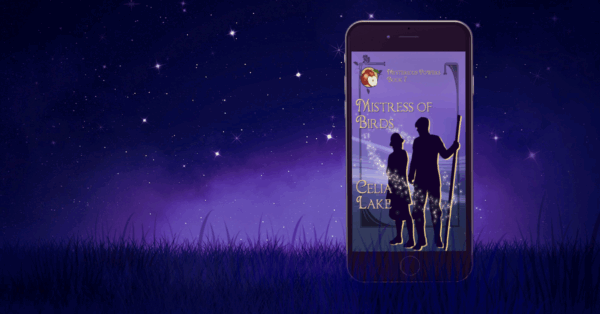
Thank you so much for joining me for Thalia and Adam’s story. My thanks as always go to my editor, Kiya Nicoll, to my early readers, and to a couple of others who kindly shared their thoughts on the impact of some of the more physical symptoms of PTSD on the body. This book is also much better for me attending a panel on Gothic fiction at this year’s Flights of Foundry virtual convention.
Today’s author notes start with a few general notes about the book, then talk in a bit more detail about shell shock and PTSD. (If you’d rather not read about that, skip to the third section starting with “Anna and Una” for the notes on the rest of the book.)
Overall, I’d wanted to try a more Gothic romance feel for a book, and a remote house on the edge of Dartmoor was just the thing. Of course, the context of Albion gave me a little more scope for spookiness than some of the classics in the genre. The key idea came when I was reading about British seasonal folklore and the animals, plants, and birds associated with different aspects. As soon as I read about there being lore about people trying to capture a cuckoo to maintain an eternal spring, I knew I had a story. Normally, they arrive in April, bringing the warmer months with them, and return to Africa in August and signal the coming autumn.
As Thalia comments during the book, there is a radius effect. Adam’s uncle’s orchards are on the edge of it, so time moves oddly but isn’t in stasis, and the house is far enough away that other parts of the village aren’t affected. (I have a map with a radius drawn on it, to make sure.) The effects are a bit varied – many body processes continue reasonably normally, because someone’s inherent physicality and magic overwhelms the stasis, but others like nails or hair growing slow way down. Similarly, plants stay alive, but they don’t change much with the seasons.
The roses are Rosa chinensis ‘Mutabilis’, a repeat bloomer introduced to Europe in the 19th century. That means they’ll keep blooming through the summer.
I originally wrote a version of chapters 11 and 12 where Adam and Thalia realised they were both magical. It’s fairly rare for me to go back and rewrite an entire chapter, but when I got through chapter 12, I slept on it, and decided to try it the other way. As that’s what ended up in the book, you know I found it more interesting for that to be ambiguous for them both much longer.
Before I get into the other details, I want to touch on a sizeable part of this book, namely Adam’s shell shock (which we’d now call post-traumatic stress disorder), and Thalia’s own PTSD, which was not particularly recognised by anyone in her life. While there were cases of it earlier in military history, mostly related to infantry and exposure to explosions and shelling, it became a much larger concern during and after the Great War.
The treatments (as briefly mentioned in chapter 31) were often brutal, an attempt to get a response to stimuli by any means available. For a time, even using the term shell shock was censored and banned, and it was only in the last year of the War and the later aftermath that any real progress was made on offering caring and supportive treatment that allowed many of the men with shell shock to return to their lives in some form. Craiglockhart was one of the best known institutions treating men with shell shock. The Gospatricks, mentioned in several places, appear in Carry On, as well as briefly in Casting Nasturtiums (collected in my Winter’s Charms anthology).
That didn’t help everyone. PTSD and other similar trauma can have a huge effect not only on someone’s mental health (including depression, anxiety, insomnia, and other concerns), but also on the mind and body. A number of people experience the kinds of physical impact that Adam does – dropping things, not being able to trust where his feet are. Some people have systemic issues like challenges in regulating blood pressure that make it tricky to stand up. And of course, people may also have flashbacks, memories, disassociation, or other experiences.
A number of my characters have these experiences to some degree, but Adam had a much worse experience in a number of ways, and the impact has been much more serious for him. A decade later, the symptoms themselves have settled down, but he’s not able to handle many kinds of work or living situations with anything like equilibrium. Thalia has a different set of challenges, where she’s constantly vigilant and anxious, torn between wanting to be around the artistic friends she’s made, but finding the noise and chaos of the city to be difficult.
I wanted to give these two people a space where they could have a good life. And because it’s a romance, to have that together, with someone who understands all the ways the mind and body can be complicated and frustrating.
Anna and Una, mentioned briefly in chapter 1, appear in “A Dog’s Chance”, which was written for the Her Magical Pet charity anthology. It’s also available as an extra.
The Second Pan is a magical literary journal, riffing on the many literary journals of the period.
Apples took so much research. I have a deep appreciation for the lovely people who build and maintain databases of apple varieties. I spent quite a long time narrowing down apples that were known to be in Devon, and which were old enough varieties to have been growing in that orchard for a bit. And then, of course, sorting them by when they ripen, figuring out what they look like in detail. All the apple varieties are real, I didn’t make any up. The customs Adam follows, about greeting the “Old Man” of the orchard (the oldest tree), are common to a number of places.
Pete Brown’s book The Apple Orchard: The Story of Our Most English Fruit was also a great help.
Snap is one of the Five Schools, and not one I’ve had cause to spend any time with before this book. Adam, of course, attended. It’s the school which focuses on agricultural magics in all their varieties, and students who attend come away with a wide range of skills and magical approaches to keeping livestock thriving, tending their fields and orchards, preventing and mitigating blights, and much more.
The Snap tie is green and tan. They’re rather likely colours for an agricultural focus, but when I started looking at other ties that might be unremarkable in the area, I realised that the Devonshire regimental tie was a very close match. Of course, if you only know one or the other, they’re easy to mistake for each other. (And Thalia is more used to looking for the pendant or other piece of jewellery with a set stone that’s used by most people who attended Schola.)
Thalia’s musings on the word forest have to do with the fact that originally in English, a forest was a legal designation, a piece of land set aside for hunting, by the King or a designated lord. Think of it as a hunting preserve that often happens to have trees, rather than the trees being inherent in the definition.
Eve’s pudding and Devon flats are both baked goods (as I hope is clear from context). Eve’s pudding involves apples being baked in a batter, often served with a thick egg and cream based custard. Devon flats are a classic biscuit (or in American, cookie) which use clotted cream where other recipes might use butter and/or cream.
The Hairy Hands of Dartmoor are a real story, what we’d think of as an urban legend these days. There are several reports of hairy hands reaching and yanking steering wheels of cars into the retaining wall along that stretch. Theories on what was happening vary.
The hare legends throughout the book all come from local sources.
On that note, Sabine Baring-Gould was a rector who wrote an astonishing number of books about Dartmoor (his beloved home) and many other topics, including a great deal about folklore. The pieces Thalia quotes are all from his A Book of Dartmoor which is available on Project Gutenberg and a number of other sites, since it is now in the public domain. I first became aware of Baring-Gould thanks to Laurie R. King’s The Moor, one of the books in her Russell and Holmes series. (Yes, that Holmes.)
I’m normally very careful about checking what words were in use in whatever year I’m writing, but one of my early readers spotted me trying to use the word tsunami, when Thalia is thinking about flooding. (My early readers are the best at this sort of thing.)
The song and story about the sisters and the harp is known as Twa Sisters most commonly. Not the most useful title, I know! It has a long history, with more than twenty versions in English, dating back to before 1656. You may also find it called “Minnorie” or “Binnorie” or the “Cruel Sister” or “The Wind and the Rain” among other titles. It involves one of the sisters getting jealous of the other, drowning her, and then someone making a harp from the drowned sister’s bones, which then sings of the murder. Murder ballads are consistently themselves, here.
The glass flowers are a real thing, and they are utterly gorgeous. I’m familiar with them because of the extensive collection of glass flowers in the Harvard Natural History Museum, a collection of over 4,000 models made by father and son (Leopold and Rudolph Blaschka) between 1886 and 1936. If you search on “glass flowers”, you should get a number of wonderful photos and explanations. While this was the largest and most varied collection, glass flowers were made for study and university use in the period by other people. They’re stunningly beautiful works of art, every detail perfectly tinted for learning.
Lord Teague, mentioned briefly, is indeed Mabyn Teague’s son. (She appears primarily in The Hare and the Oak.) She regrets the state of her relationship with him at that point, but he is doing reasonably well by his land.
Giant Hogweed is a real plant, growing to huge sizes, invasive in Britain, western Europe, and North America. It can grow to between 2 and 5 metres (6 to 15 feet), and the sap is phototoxic, raising blisters and scars on exposed skin.
Finally, this book touches on the way the War damaged the landsense of so many men (and some women), and how listening to the people who went to Snap might be a help here. If you’re interested in the land magic aspect, the Land Mysteries series (coming out starting in November 2022) deal with this aspect of Albion in much more depth. They’re set in and around the Second World War, featuring characters who’ve appeared in my other books.
Again, thank you for reading! The best way to know what I’m up to is to sign up for my newsletter, but I also share book releases on my social media sites. Signing up for the newsletter will also get you extras.